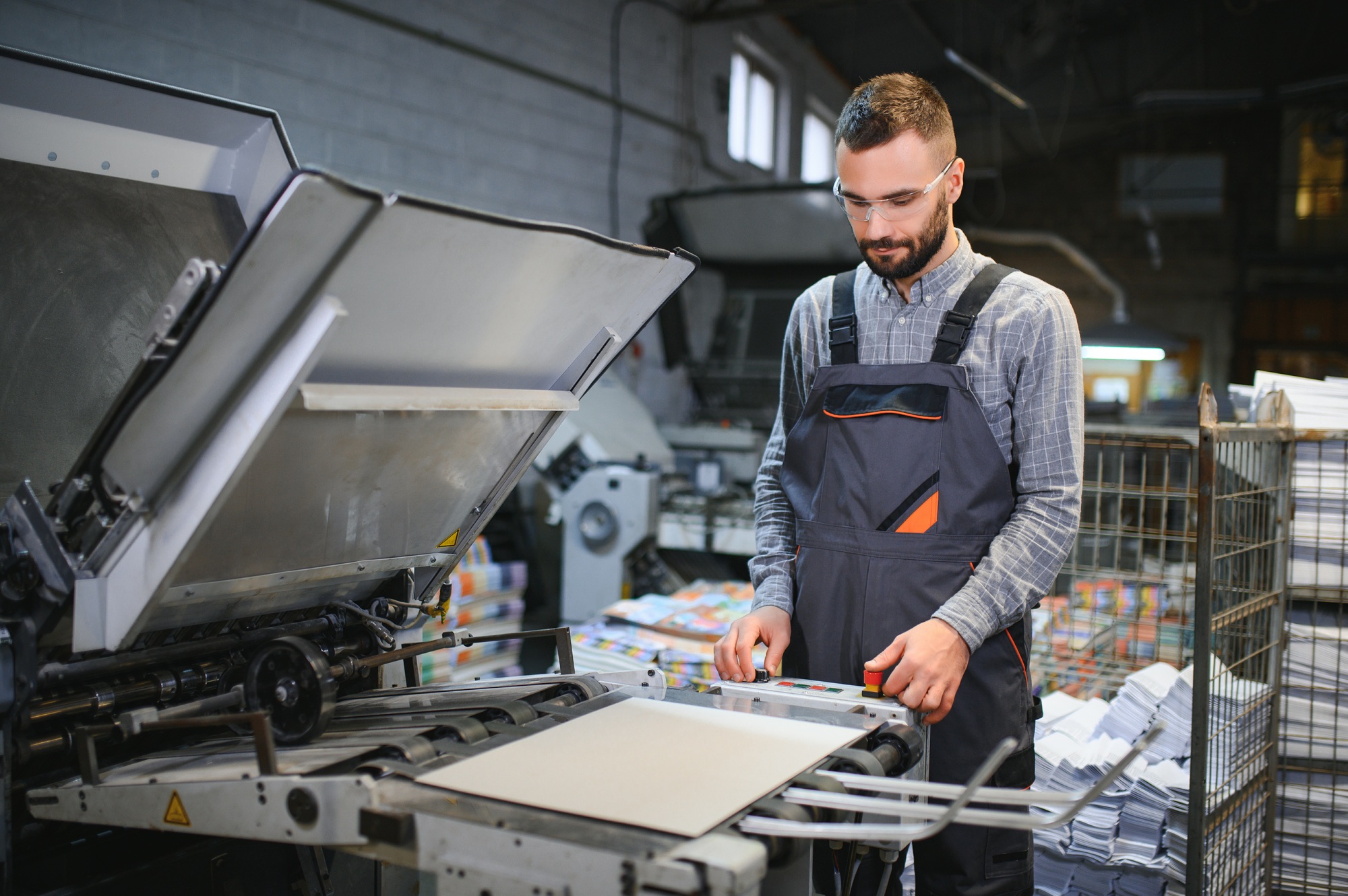
We’ve added a new piece of equipment to the shop floor: a ColDesi 24H5 Direct-to-Film (DTF) printer. It’s a machine we’ve had our eye on for a while, and it fills a real gap in what we can offer — specifically for customers who don’t fit cleanly into a screen-printing minimum.
If you’ve ever been told “we need a 24-piece minimum” for a project where you really only needed six shirts, this is for you. Here’s what DTF is, what the 24H5 changes for us, and the kinds of orders it’s built for.
What Direct-to-Film Printing Actually Is
DTF is a relatively new decoration method that’s reshaping short-run custom apparel. The process works like this: a design is printed in full color (plus a white ink underlay) onto a special PET film. A hot-melt adhesive powder is applied to the wet print, then cured. The film is heat-pressed onto the garment, the adhesive fuses to the fabric, and the film peels away — leaving a soft, durable, full-color print behind.
Unlike screen printing, there are no screens to burn, no setup fees, and no per-color charges. Unlike direct-to-garment printing, DTF works on almost any fabric — cotton, polyester, blends, denim, even nylon — and it doesn’t require pre-treatment.
Why We Added It Now
Screen printing is still the workhorse for bulk orders. It’s cost-effective, durable, and the right call for the vast majority of what we do. But it’s built around volume — once you set up a screen and mix ink, you want to be running fifty or a hundred pieces to make the economics work.
That left a real gap for two groups of customers:
- Short-run buyers — teams of 6 to 30, sample runs, one-off events, family reunions, small fundraisers
- Retail customers — brands building inventory in small drops, testing designs before scaling, or running per-customer personalized SKUs
The 24H5 lets us say yes to those projects on the same equipment list that handles a 500-piece corporate run. No more “we can’t help you below X pieces.”
Where DTF Wins Over Screen Printing
For the right project, DTF flat-out beats screen printing. The shortlist:
- Tiny minimums. Six pieces? Twelve? Even one? All viable.
- Photographic and full-color designs. Gradients, photo-realistic art, dozens of colors in one print — no extra cost.
- Mixed fabric types in one order. Run cotton tees, poly performance shirts, and tri-blends in the same job without changing inks.
- Personalization. Different names, numbers, or designs on every shirt — without restarting setup.
- Fast turnaround. No screen burn time, no ink mixing — we go straight from approved artwork to printed film to garment.
It also produces a soft hand that holds up well in the wash. We’ve covered the longevity side in our care guide for printed apparel — DTF follows the same rules: cold wash, low heat dry, inside out.
Why This Is Big for Retail Customers
Retail apparel is its own challenge. You’re not ordering 200 of one shirt — you’re ordering an assortment of sizes, colors, and designs to fill a rack or a Shopify catalog. Traditional screen printing forces a choice: order a lot of each SKU and tie up cash, or limit your range.
DTF flips that math. You can order:
- Multiple designs in a single run at the same per-piece cost
- Just-in-time inventory — print what sold this week, not what you hope sells next month
- Test designs in 5-10 pieces before committing to a larger run
- Per-customer prints for built-to-order online stores without a separate fulfillment pipeline
This is one of the reasons the line between retail and promotional apparel has been blurring. The decoration method used to dictate the order size. With DTF in the mix, it doesn’t have to.
The Kinds of Projects We’re Already Seeing
Since the 24H5 came online, we’ve been working on:
- Small-batch tees for a Connecticut brewery launching a new beer
- A family reunion order of 14 shirts with a personalized name on the back of each
- A prototype run for a startup testing three different design directions before picking one
- Coach jackets for a youth sports team that needed numbers on the sleeves
- Retail tees for a local boutique stocking 5-10 of each design
None of those would have made economic sense on screens. All of them work on DTF.
When Screen Printing Is Still the Right Call
DTF doesn’t replace screen printing — it complements it. For 100+ pieces of the same design, screen printing is still cheaper per piece and gives you access to specialty inks (puff, metallic, glow-in-the-dark, athletic high-density) that DTF can’t do. We’ll always recommend whichever method actually fits your project.
If you’re not sure which way to go, our guide to what to send when you request a quote walks through the details we need to point you to the right decoration method.
Final Thoughts
The ColDesi 24H5 isn’t a replacement for anything we do — it’s an addition. Screen printing still handles bulk. Embroidery still handles polos, jackets, and caps. DTF now handles the projects that fall in between: small, custom, photographic, personalized, retail-style.
If you’ve had a project on hold because the minimum was too high or the design too complex for screens, this is probably the answer. Get in touch and we’ll spec it out.