A custom T-shirt only does its job when people actually wear it. A great design turns your staff, customers, and event attendees into walking advertisements — while a cluttered or awkward one ends up balled at the bottom of a drawer. The good news: you don’t need to be a professional designer to get it right. A handful of simple principles separate the shirts people reach for from the ones they never touch.
Here’s how we help customers design custom tees that people are genuinely happy to wear.
The Short Version
Design for the people who’ll wear the shirt, not just for your logo. Keep it simple, give it one clear focal point, choose colors with strong contrast against the garment, and make sure the artwork is built to print cleanly. Simple, confident, and wearable beats busy and “corporate” almost every time.
Start With Who’s Going to Wear It
The single biggest design decision happens before you touch any artwork: who is this for? A shirt for your sales team, a giveaway at a festival, and a piece of retail merch all call for different looks. People wear things they’re a little proud of — so think about whether your design would look good on someone walking down the street, not just in a boardroom. When a shirt feels like something a person would choose to buy, it gets worn constantly. Our guide on choosing custom apparel your team will actually wear digs deeper into that mindset.
Keep It Simple
The most common mistake we see is trying to say too much. A phone number, a web address, a tagline, three logos, and a background graphic all fighting for space makes a shirt look like a billboard — and nobody volunteers to wear a billboard. Pick one focal point, give it room to breathe, and cut everything that isn’t essential. A single bold graphic or a clean, confident logo almost always outperforms a crowded layout. If in doubt, remove an element rather than adding one.
Choose Colors That Actually Pop
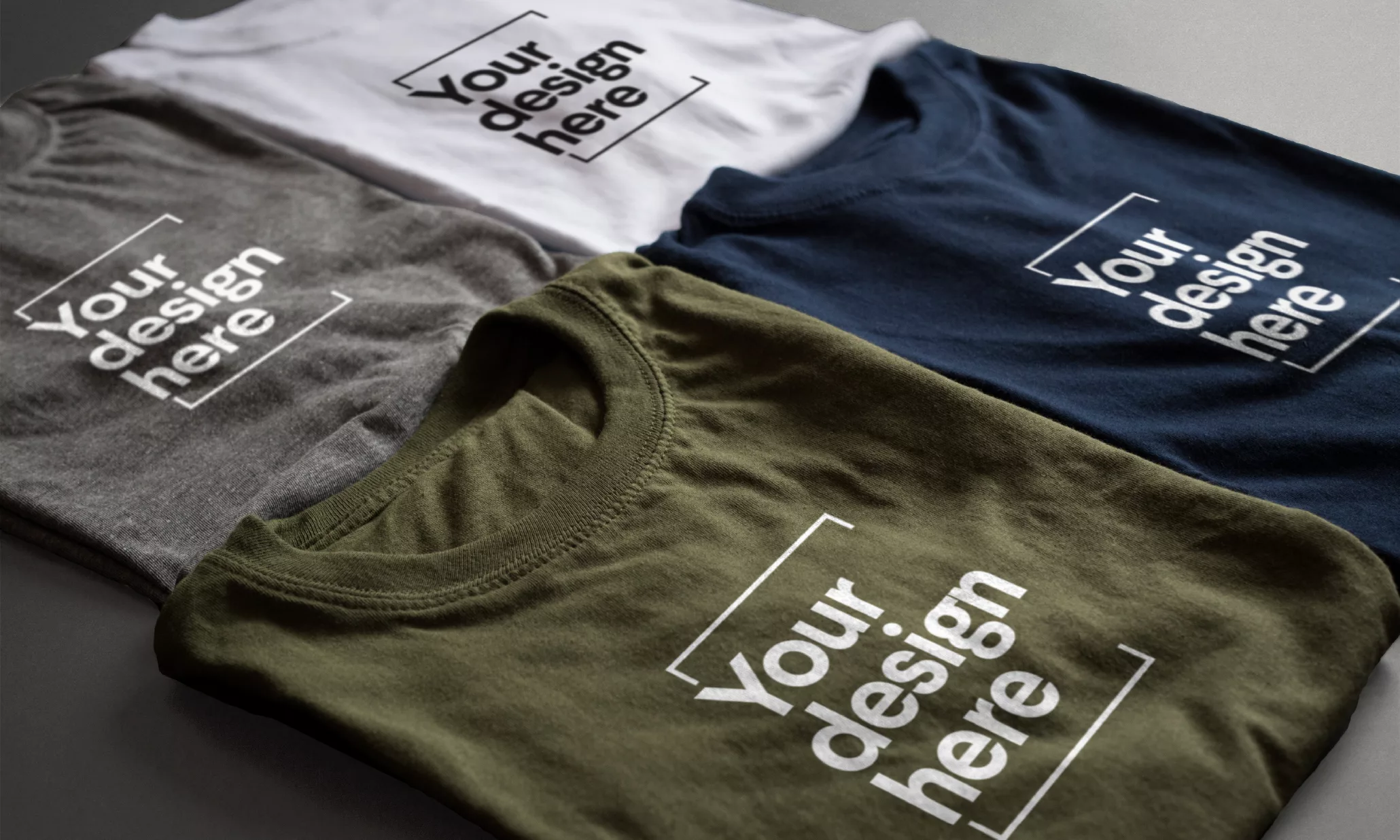
Color is where good designs win or lose. The key is contrast between your artwork and the garment — light designs on dark shirts, dark designs on light shirts. A navy logo on a black tee disappears; the same logo in white or a bright accent jumps off the fabric. Limit your palette to a few strong colors rather than a full-color gradient, which also keeps printing cleaner and more affordable. Garment color matters just as much as ink color, so pick them together — and remember the fabric itself affects the final look, which we cover in our guide to choosing the right fabric.
Design for How It’ll Be Printed
A design that looks great on screen doesn’t always translate to fabric. Fine lines, tiny text, and subtle gradients can break down depending on the decoration method, so it helps to know how your shirt will be produced before you finalize the art — our overview of screen printing, embroidery, and other decoration methods explains what each one does well. Just as important is supplying artwork that’s actually print-ready: high-resolution, properly formatted files save time and money and keep your design crisp. Our post on preparing your logo files for printing walks through exactly what we need — no design degree required.
Mind the Size and Placement
Even a perfect design lands badly if it’s the wrong size or in the wrong spot. Oversized prints can feel loud and cheap; too-small ones look timid and get lost. And a logo that’s too high on the chest or off-center reads as amateur. Matching the scale and position to the garment and the goal is its own small art — our guide on where to put your logo covers the standard placements and when to use each.
Final Thoughts
Designing a custom T-shirt people want to wear isn’t about cramming in everything you sell — it’s about restraint. Design for your audience, keep it simple, make the colors pop, build the art to print well, and get the size and placement right. Nail those, and your shirt stops being “merch” and becomes something people actually want to put on.
Have an idea but not sure how to bring it to life? Get in touch — we’ll help you turn it into a clean, print-ready design and a shirt your people will be glad to wear.