A branded hat might be the hardest-working piece of apparel you can put a logo on. It rides at eye level, gets worn long after a giveaway T-shirt has been retired to yard-work duty, and pulls double duty as a uniform piece, a trade-show handout, and a retail item all at once. But headwear is also less forgiving than a flat shirt — the curved, structured front of a cap changes how a logo has to be built and stitched, and the gap between a crisp, professional hat and a puckered, off-center one usually comes down to decisions made before the order is ever placed.
Here’s what we walk customers through when they come to us for custom embroidered headwear, based on what we run in the shop every day.
Why Embroidery Is the Default for Hats
For shirts, you have a real choice between printing and stitching. For hats, embroidery wins almost every time. Thread holds up to the sun, sweat, and repeated wear that headwear takes far better than a printed graphic, and the raised, dimensional texture of stitching simply reads as more premium on a cap front. It also handles the curved, structured panel of a hat in a way that flat printing methods struggle with.
That said, embroidery isn’t the answer for every garment in your order — if you’re pairing hats with tees, hoodies, or bags, it’s worth understanding the trade-offs. Our guide on choosing between screen printing, embroidery, and other decoration methods covers when each one makes sense.
Choosing the Right Cap Style
“A hat” covers a lot of ground, and the style you pick affects both the look and how the embroidery behaves:
- Structured caps — a stiff buckram-backed front panel that holds its shape and gives embroidery a firm, flat surface to stitch into. The safest choice for a clean, professional logo.
- Unstructured & “dad” hats — soft, low-profile, and increasingly popular. They stitch well but need a slightly simpler design, since there’s less backing to support dense detail.
- Trucker & snapback styles — great for a casual, retail-leaning brand look, with a structured foam front that takes embroidery beautifully.
- Performance & knit beanies — moisture-wicking caps and winter beanies round out a year-round program; stretch and nap change how a design needs to be built.
If you offer your team or customers more than one hat style, decide early — the same logo often needs slightly different setups for a structured cap versus a soft beanie.
What Makes a Logo Embroider Well
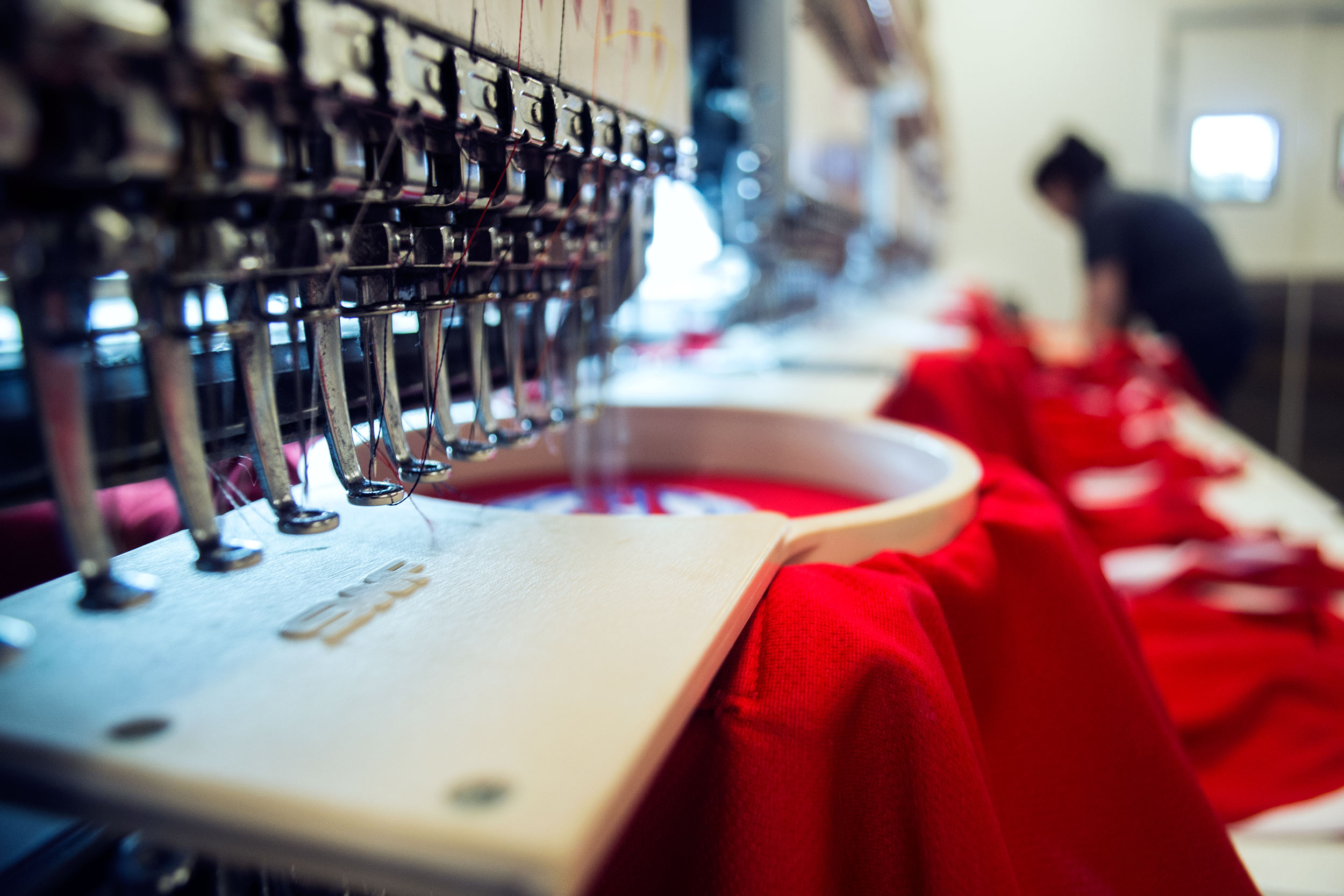
Embroidery is thread, not ink, so the rules are different from printing. Fine lines, tiny text, and subtle gradients that look great on screen can turn into an unreadable blob once they’re stitched at cap-front size. Before a single stitch is sewn, your artwork has to be digitized — converted into a stitch map that tells the machine the path, density, and direction of every thread.
A few things that make the difference:
- Keep small text legible — lettering under about a quarter-inch tall is risky; we’ll flag anything that won’t hold up.
- Simplify fine detail — a clean, bold version of your logo almost always stitches better than a busy one.
- Limit the thread colors — embroidery handles solid spot colors wonderfully but can’t reproduce photographic shading.
You can see examples of the work and the formats we accept on our custom embroidery services page. A good digitizer is the single biggest factor in how your finished hats look.
Stitch Count, Pricing, and Minimums
Embroidery pricing works differently from printing. Instead of color count, the main driver is stitch count — how many stitches it takes to render your design — plus a one-time digitizing setup fee for new artwork. A small, simple left-chest-style logo on a cap front is inexpensive to run; a large, dense, full-front design costs more per piece because it takes longer to stitch.
The good news is that the digitizing fee is paid once, so reorders of the same hat are cheaper down the road. To get an accurate quote the first time, it helps to have your quantity, cap style, logo file, and thread colors ready — our rundown of what information you need before requesting a custom apparel quote walks through exactly what to gather.
Lead Times and Planning Ahead
Hats are a sourced blank just like shirts, which means availability of a specific cap style, color, and brand can swing your timeline. Add digitizing approval and the stitch run on top of that, and a headwear order is something you want to start well before your event, season, or uniform rollout — not the week of.
If you have a date on the calendar, build in buffer. Our guide on custom apparel lead times covers realistic windows and how to stay out of the rush-fee zone.
Making Embroidered Hats Last
One of embroidery’s biggest advantages is longevity — stitched thread doesn’t crack or peel the way some prints can. To keep both the logo and the cap’s shape looking sharp, spot-clean when you can, hand-wash rather than running structured caps through a machine, and let them air-dry on something that holds their form. The same care principles we recommend for all decorated apparel apply here; see how to care for custom printed and embroidered apparel so it lasts for the full rundown.
Final Thoughts
Custom embroidered hats deliver some of the best return of any branded product — they’re durable, they get worn constantly, and a well-stitched logo looks genuinely premium. The keys are picking the right cap style for the look you want, building a logo that embroiders cleanly, and giving the order enough lead time to be done right.
If you’re thinking about branded headwear for your team, your next event, or a retail line, get in touch and we’ll help you choose the right caps, dial in the artwork, and quote it out before you commit.